Monday, January 11, 2016

How Americans Got So Fat, in Charts

The amount of calories we eat has jumped since the 1970s, and waistlines have grown accordingly.
Americans should eat more fruits, vegetables, and whole grains, while cutting back on added sugars, sodium, and saturated fat, according to new dietary guidelines published by the federal government Thursday. The guidelines, which influence school lunch menus and federal nutrition policy, also recommend eating more seafood in place of other proteins like meat, poultry, and eggs.

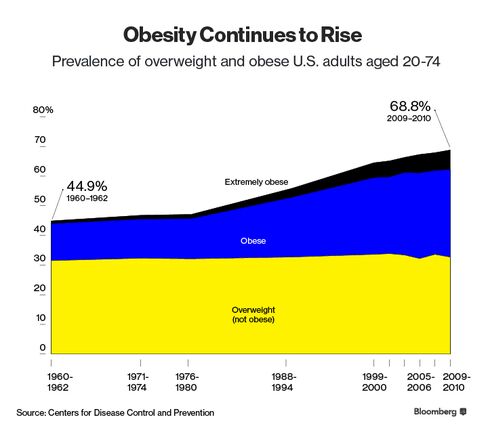
Our poor nutrition has contributed to a generations-long national weight gain. Today two-thirds of U.S. adults are overweight or obese. Half are afflicted with chronic conditions like diabetes or high blood pressure that can often be prevented with better diets.
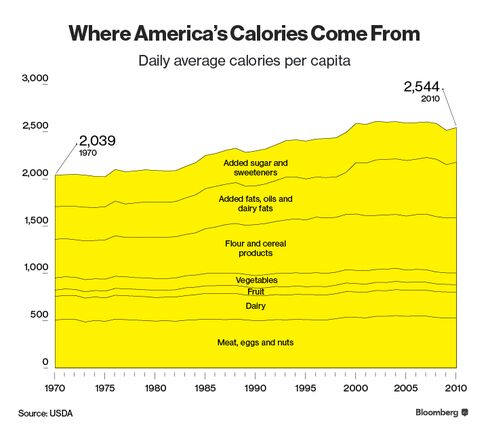
We didn't get this way overnight. The average calories available1 to the average American increased 25 percent, to more than 2500, between 1970 and 2010, according to data from the U.S. Department of Agriculture. It's not like we added an extra meal to the day: Rather, an evolution in the type of foods we eat led to steady growth in calories.


Added fats and grains account for a growing share of total caloric intake. These two categories, which include oils and fats in processed foods and flour in cereals and breads, made up about 37 percent of our diet in 1970. By 2010, they were 46 percent—a larger share of the growing pie.


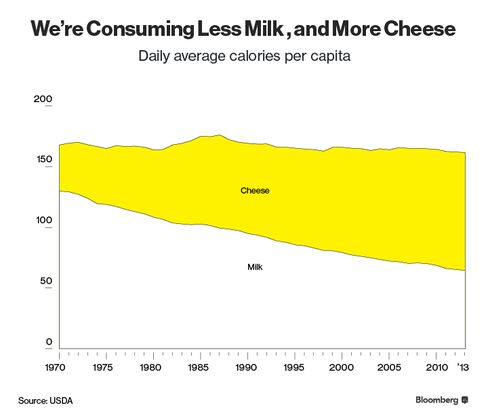
Cheese is replacing milk.


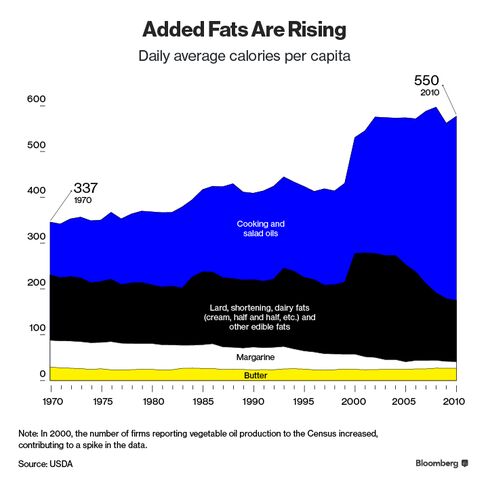
A lot more fat goes into our foods.

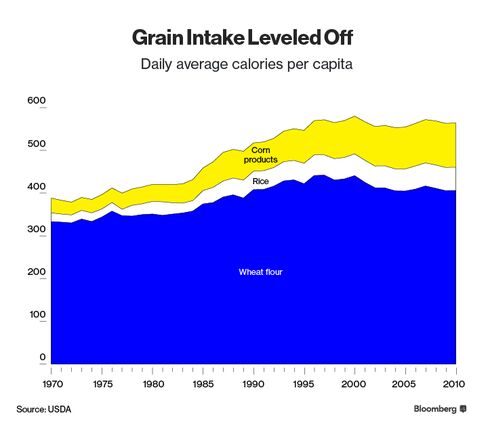
Calories from wheat, rice, and corn have increased. This includes refined grains like white bread that provide calories but are stripped of much of the nutrients in whole grains.

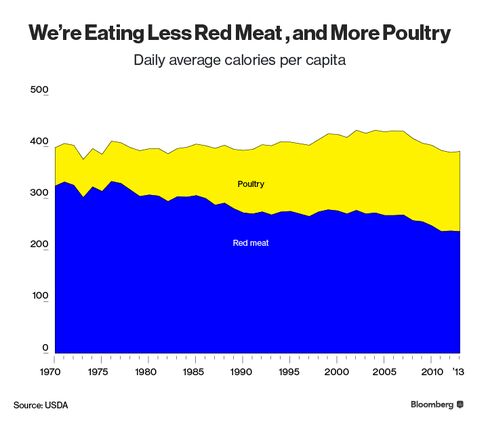
There are some indications that Americans are changing their diets to become healthier. For example, we're swapping red meat for chicken.

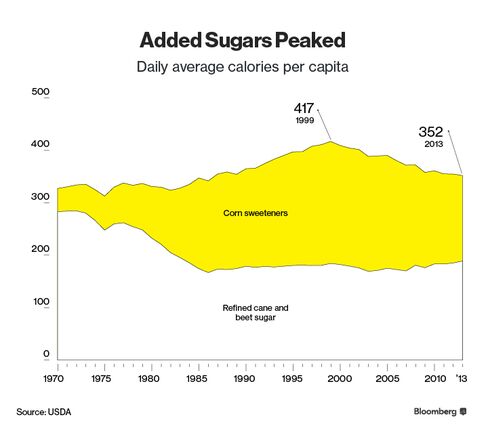
And though corn syrup boomed since the 1970s, the total amount of sweeteners we eat has declined. That's partly because Americans are drinking less soda.

These positive changes haven't negated the overall increase in calories on our plates. More than two-thirds of U.S. adults are overweight or obese, compared to less than half in the 1970s.


The new dietary guidelines aim to reverse this pattern. "Trends in food intake over time show that, at the population level, Americans are not consuming healthy eating patterns," according to the new guidelines. "Almost all people in the United States could benefit from shifting choices to better support healthy eating patterns." While Americans have shown some signs of eating more healthfully, reversing the obesity epidemic will take more.


Friday, January 8, 2016

Jobless Claims in U.S. Increase to Highest Level Since July (BusinessWeek)

Inside RTB Bor Copper Plant
The number of Americans filing applications for unemployment benefits rose more than projected during the Christmas week, reaching the highest level in almost six months, perhaps reflecting typical swings during holidays.

Jobless claims jumped by 20,000 to 287,000 in the week ended Dec. 26, a report from the Labor Department showed on Thursday in Washington. The median forecast of 30 economists surveyed by Bloomberg called for 270,000. Applications haven’t been this high since the week ended July 4, the American Independence Day holiday.

While there was nothing unusual in the state-level data, the jump could have been caused by the volatility introduced when the numbers are adjusted for seasonal variations, a Labor Department spokesman said as the figures were released to the press. Limited firings, steady hiring and an unemployment rate at more than a seven-year low underscore job market improvement that allowed the Federal Reserve to lift interest rates this month for the first time since 2006.

“We do have to discount the heightened volatility we have around this time of the year,” said Mike Englund, chief economist at Action Economics LLC in Boulder, Colorado, who correctly projected the jump. “When the dust settles, we’ll see claims drop back down. There will be continued slow improvement in the labor market.”

Holiday Swings

No states estimated data last week, according to the Labor Department. Before adjusting for seasonal variations, the increase in claims last week was about typical for this time of year, the agency spokesman said. The seasonal adjustment, however, wasn’t anticipating the increase, the spokesman added.

Economists’ estimates in the Bloomberg survey for weekly jobless claims ranged from 259,000 to 287,000. The previous week’s figure was unrevised at 267,000.
The four-week moving average, a less volatile measure than the weekly claims numbers, increased to 277,000 last week from 272,500.

The number of people continuing to receive jobless benefits rose by 3,000 to 2.2 million in the week ended Dec. 19. The unemployment rate among people eligible for benefits held at 1.6 percent. These data are reported with a one-week lag.

Claims, Payrolls

Initial jobless claims reflect weekly firings, and a sustained low level of applications has typically coincided with faster job gains. Many layoffs may also reflect company- or industry-specific causes, such as cost-cutting or business restructuring, rather than underlying labor market trends.

Since early March, claims have been below the 300,000 level that economists say is typically consistent with an improving job market.

Data released earlier this month showed the economy added 211,000 workers in November, and the unemployment rate held at 5 percent, more than a seven year low.
Citing improvement in the economy and the labor market, Fed policy makers on Dec. 16 set the new target range for the federal funds rate at 0.25 percent to 0.5 percent, up from zero to 0.25 percent.


Monday, December 28, 2015

Uber's Rival Lyft Plans to Raise Up to $1 Billion in New Funds (BusinessWeek)

Lyft Inc. Application
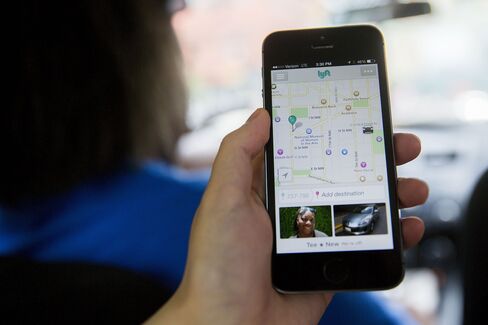
Ride-hailing company Lyft Inc. plans to raise as much as $1 billion in new funds, according to a Delaware state filing, in a round of financing analysts said could sharply boost the valuation of Uber Technologies Inc.’s largest U.S. rival.

Lyft didn’t indicate in the Friday evening filing how much had been raised, who was investing in the round or list a valuation. Sven Weber, a financial filings expert, pegged the pre-money valuation at about $4.5 billion while Justin Byers at VC Experts estimates it closer to $3.9 billion. Lyft was valued at $2.5 billion when it announced a previous funding round in March.

The latest fundraising round contained some downside protection for new investors, including the provision of extra shares should Lyft go public at a lower valuation.

“This is a very modest ratchet function,” said Weber, President of the SharesPost 100 Fund. 

“It’s not outrageous.”

Fierce Fight

Fundraising documents prepared by Credit Suisse Group AG showed the company had been in talks to raise $500 million, Bloomberg reported last month.

A spokeswoman for Lyft declined to comment.

The price of the startup’s preferred stock is now $26.79, according to the filing. That’s up from $19.44 previously, Byers said.

Lyft is competing aggressively with Uber, which recently filed to raise $2.1 billion at a $62.5 billion valuation. The discrepancies in the valuations reflect Uber’s pole position in the U.S. and its global ambitions.

On Dec. 3, Lyft said it was teaming up with Uber’s biggest rivals in Asia, including China’s Didi Kuaidi, Singapore’s GrabTaxi, India’s Ola, to form a global alliance that will make their apps cross-compatible for travelers.

Lyft lost $127 million in the first half of 2015 on $46.7 million in revenue, according to fundraising documents obtained by Bloomberg. It said last month it has gained market share in key markets such as San Francisco, and has a gross revenue “run rate” of $1 billion.

Monday, December 21, 2015

Here's What Your Bonus Might Look Like This Year (BusinessWeek)

It's going to be a great bonus season (if you were already in line for a bonus).
Image result for Bonus money
While most workers don't expect to get a little extra something from their bosses this year, many companies are, in fact, doling out holiday bonuses.

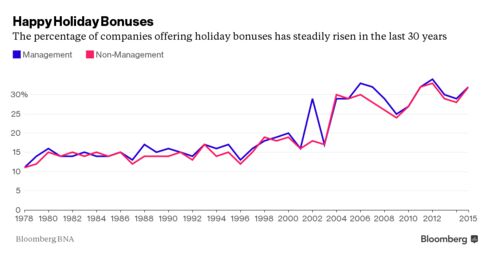
Of 368 human resource professionals and executives surveyed in Bloomberg BNA's annual Year End-Holiday Practices survey, 42 percent said that they planned to give end-of-year bonuses, with most employers opting for cash over gifts. After a small dip during the recession, that number has stayed consistent over the past four years. In fact, over the past three decades, the share of companies offering holiday cash bonuses has steadily increased from about 10 percent in 1978 to around 30 percent this year.

 
Who gets a holiday bonus, and how much they get, depends on their jobs. "Workers in the nonbusiness sector (e.g., health care, education, government), larger establishments and union shops should not get their hopes up," the report said. Bonuses flourish at small, private-sector companies. Half of respondents with fewer than 1,000 workers will distribute bonuses in some form to their employees. Only about a quarter of larger companies surveyed said they would give out bonuses. 

Those who are getting bonuses, however, will get bigger ones than ever. The numbers vary depending on the institution and job type. At the high end, some managers will get as much as $40,000. Managers earning the median can expect a check for around $725, up from $500 last year. Nonmanagement employees will get around $500, up from $200 in 2014. 

A majority of employers still opt out of holiday, nonperformance-based bonuses. More common are incentive-based rewards. "Pay for performance is what it's all about today," John Challenger, chief executive officer of the Chicago outplacement company Challenger, Gray & Christmas, told the Society for Human Resource Management. 

An Aon-Hewitt survey found that variable pay made up 12.7 of paychecks in 2015 in the U.S., up from 8 percent a decade earlier, with 93 percent of the 1,064 companies surveyed offering some type of bonus program—although those bonuses are reserved for certain workers, too. Fewer companies are giving bonuses to "nonexempt" employees, meaning people in jobs eligible for overtime pay, such as administrative assistants and machine operators, reported the Washington Post earlier this year. 

Just like benefits, bonuses are more attractive to recession-scarred organizations than salary increases. "Employers like the fact that it's not adding to their fixed expenses," said Ken Abosch, who heads up broad-based compensation at Aon-Hewitt. In case the economy tanks again, companies can forgo bonuses instead of firing workers or slashing salaries. "Organizations find it gives them more flexibility in managing their costs." 


Thursday, December 17, 2015

Capitol Days Event : January 13-15, 2015 @ Tallahassee, Florida


Capitol-Days-2016-banner_750
 
Florida Cabinet Members Join
Florida Chamber for Board of Governors Capitol Days Event

I hope you will join us as we welcome Attorney General Pam Bondi and CFO Jeff Atwater on Thursday, January 14 during the Florida Chamber’s Board of Governor’s Capitol Days for Lunch With The Cabinet. Discussions will revolve around securing Florida’s long-term future and how business leaders like you can help move our state in the right direction. Be sure to register today and book your room- hotel deadlines are approaching soon!

January 13-15, 2016
FSU Turnbull Conference Center, Tallahassee, FL
 Button_RegisterButton_Agenda 

Hotel Accommodations:  

Residence Inn Tallahassee Universities at the Capitol
Deadline to book: December 22, 2015
Rate: $190/night
Book your group rate for Florida Chamber of Commerce  Capitol Days Room Block

Four Points by Sheraton
Tallahassee Downtown

Deadline to book: December 23, 2015
Rate: $199/night

Book your group rate for Florida Chamber of Commerce Capitol Days Room Block


Contact Sarah Spagnola at 850-521-1292 or sspagnola@flchamber.com for sponsorship opportunities and more information.

 Ftr_CapitolDays