Tuesday, July 21, 2015

Your Google Searches Could Help the FDA Find Drug Side Effects (BusinessWeek)

Millions of people search online for information about symptoms and prescription drugs. Patterns in their searches might reveal previously unknown side effects of medications
The Food and Drug Administration is talking to Google about how the search engine could help the agency identify previously unknown side effects of medications. Agency officials held a conference call on June 9 with a senior Google researcher who co-wrote a 2013 paper about using search query data to identify adverse drug reactions, according to a record of the meeting posted to the FDA website that hasn't been previously reported. Microsoft researchers also say they have been working informally with the agency for several years on detecting drug side effects.

FDA spokesman Chris Kelly called the meeting an introduction and a chance "for the agency to begin a discussion on how we might collaborate with Google on identifying adverse event data, using Google’s technologies and data.” The agency declined to make officials available for interviews, and Kelly wouldn't comment on the FDA's talks with other companies. A Google spokesman had no comment.

The Google scientist on the call was Evgeniy Gabrilovich. His bio on Google’s research page says he’s a senior staff research scientist specializing in data mining. A former employee of Yahoo, Gabrilovich co-wrote a paper two years ago that used Yahoo search data to identify suspected drug reactions. The analysis, based on 176 million Yahoo queries in 2010, demonstrated that search data can help find drug reactions "that have so far eluded discovery by the existing mechanisms," according to the paper. It was published in the peer-reviewed Journal of Medical Internet Research.

Before drugs are approved by the FDA, the only people who get them are carefully selected patients enrolled in clinical trials—generally a few thousand people at most. After they reach the market, medicines may go to hundreds of thousands, or even millions of people. Some of them will be taking additional pills or have conditions that the drug affects. Evidence of negative side effects can lead regulators to change a drug’s safety warnings or prescribing practices. In rare cases, safety concerns can cause a a medicine to be pulled from the market entirely, as happened with the painkiller, Vioxx.

The government’s process for tracking so-called adverse events (which involves patients, doctors and pharmaceutical companies submitting forms that describe possible reactions) hasn’t changed much since the late 1990s. The FDA now gets more than a million reports of adverse drug reactions a year. Although the agency has tried to make the data easier to access, critics say the system probably misses many adverse events and can be slow to detect safety problems.
Companies have been trying for years to sift the noise of the internet for meaningful signs of drug reactions. “If you have the right technology to connect the dots, then you can see problems very, very early on,” says Ido Hadari, chief executive of Treato, which scans patient forums and other online postings. He wouldn’t comment on whether Treato is talking with the FDA.

Beyond the discussion with Google, there are signs that the FDA is expanding its search for new sources of information and ways to monitor the safety of drugs on the market. Last month the agency announced a collaboration with PatientsLikeMe, an online patient network. And last year, an FDA researcher co-authored a paper about monitoring drug safety on Twitter.

Microsoft's researchers have been working on the problem for several years and have co-authored a paper with FDA colleagues, says Eric Horvitz, distinguished scientist and managing director at Microsoft's research arm.

Horvitz, along with other researchers from Microsoft and Stanford University, published a 2013 paper (PDF) finding that Web search data could have exposed the adverse interaction between the antidepressant Paroxetine (aka Paxil) and cholesterol-lowering drug Pravastatin, which together can cause hyperglycemia, or high blood sugar. People who searched for both of those drugs over a 12-month period were also more likely to search for terms related to high blood sugar, such as diabetes and dry mouth, according to the paper in the peer-reviewed Journal of the American Medical Informatics Association. The analysis of millions of searches1 on Google, Yahoo, and Microsoft's Bing were from 2010, before the interaction was publicly reported the following year.

Google scientist Gabrilovich’s paper analyzed how searches2 for such common symptoms as “cramps,” “weight gain,” or “tired” differed among people who also searched for the name of a medication. While serious symptoms that appeared shortly after treatment started were likely to be known side effects reported to the FDA, the researchers found that search data were more likely to reveal reactions that "appear much later after the beginning of treatment, hence their association to the drug is often overlooked."



Monday, July 20, 2015

The End of Boys and Girls: These Companies Are Going to Change How Your Kids Dress (BusinessWeek)

Frustrated parents are launching apparel startups to upend gender norms
Svaha clothing line
Ever since Jaya Iyer's daughter was a toddler, she had been fascinated by Saturn and its icy rings. When Swaha turned three, she had a space-themed birthday party. But when her mom went to find clothes with space images for Swaha, she couldn't find any. They were all in the boys section. 

So the 41-year-old mother of two, who has a doctorate in fashion merchandising, started her own business called Svaha (which is how her daughter's name is pronounced) to sell clothes that upend gender stereotypes. One shirt features a grinning green stegosaurus, the plates on its back adorned with polka dots. A second comes in a blazing pink hue, with an astronaut planting an American flag on the moon. That one should satisfy her daughter. "She was very upset with me for not ever buying her anything with astronauts on it," Iyer says. "Then she started telling me: 'I want a ninja on my shirt.'"

Svaha is one of several startups that have emerged in recent years with the goal of changing the standards that govern what kids wear. These upstarts aren't looking to replace current kid's apparel entirely. Instead, their founders say they want to provide children with more options. Handsome in Pink says it's all right for boys to wear pink and purple. BuddingSTEM offers science-themed garb for girls. Perhaps the buzziest label is Princess Awesome, which raised more than $200,000 in a successful Kickstarter campaign, showing demand for pirate-themed dresses and girl's apparel covered in the symbol for pi. Most of the ventures remain in early stages as online-only entities using crowdfunded or bootstrapped cash to sell small numbers of shirts or dresses. 

Several of the startups share a common origin: They were borne out of parental frustration with major retailers. Simply shopping in the opposite gender's section isn't the answer, these parents say. Cultural norms mean that as kids get older, designating certain items as male or female can confuse and frustrate them. A girl may not want to wear something designated for boys, and vice-versa. 
"Most kids and parents are going to the big retailers and seeing all these messages of what its means to be a boy or a girl," says Sharon Choksi, co-founder of clothing lineGirls Will Be. Choksi's daughter Maya, now 10, never liked sparkles or "feminine" colors, so the Choksis would shop for Maya in the boys' section. As Maya got older, Choksi worried that "boy" and "girl" labels would unnecessarily upset her daughter. 
Choksi, from Austin, started selling girl's shirts in 2013 before expanding into hoodies and shorts. In an effort to encourage girls to move around freely, the fit of Girls Will Be tops fall somewhere between a traditional, fitted girl's shirt and the boxy, looser fit typically marketed to boys. One design reads, “bold, daring, fearless, adventurous, so many things,” while another features a silhouette of a girl doing a flying sidekick. Choksi wants her clothes to fill a gap left open by big companies. "When are the big retailers going to wake up and realize that not all girls are the same and not all boys are the same?" she asks.
In Seattle, Martine Zoer had similar experiences with her sons. She grew tired of her boys, now four and seven, being pushed merchandise featuring designs of dinosaurs and trucks. In 2014, she founded Quirkie Kids, a label devoted to gender-neutral clothes. "There's nothing wrong with pink or girls liking pink," Zoer says. "But if we only offer them that choice, there's something wrong with that."
“There’s nothing hardwired in our brains that says pink is for girls and blue is for boys,” says Lise Eliot, a neuroscientist at the Chicago Medical School at Rosalind Frank University and author of Pink Brain, Blue Brain: How Small Differences Grow Into Troublesome Gaps—and What We Can Do About It. It’s purely a cultural phenomenon. By the time children are toddlers, Eliot says, boys start rejecting pink because they realize it may diverge from what's expected. 
These apparel choices can have enduring repercussions by affecting kids' interests and long-term goals. For instance, since most female clothes are more fitted, they often double as restraints, Eliot says, pushing girls away from physical activities. Kids' play habits matter, because they affect development and ultimately, even what career they end up embracing. If a girl is tugged away from liking outer space by societal pressures, she probably won't veer toward an aerospace profession later in life. If a boy is discouraged from playing with dolls and wearing bold clothes, they may not want to get into fashion design one day. "They see it's the boys with the rocket ships and the girls with the pretty flowers," adds Eliot.
At major retail outlets such as Children's Place and Gymboree, there are few, if any, options for the girl who loves dinosaurs or football. Same goes for the boy who loves unicorns and hearts. Much of the merchandise is as stereotyped as can be: a T-Rex playing football in the boys section; a shirt that reads "I ❤ My B.F.F. More Than Shoes" in the girls section. A representative for Children's Place declined to comment on how it decides what designs and colors to sell boys and girls, and representatives for Gymboree did not respond to a request for comment. 
Big retailers are typically focused on quantity, so until enough shoppers demand clothes that don't fall along traditional lines, not much will change, says Patty Leto, senior vice president of childrens' wear at the Doneger Group, a trend intelligence firm. "Pink is always going to sell for girls and blue is always going to sell for boys, no matter what is going on out there with small labels," she says. In the end, it's up to the parents. "The consumer is the ultimate voter here," she says.
Take Lands' End, which in 2014 found itself under attack by angry shoppers when New Jersey mom Lisa Ryder wrote a letter decrying stereotypes in its clothing selection. Flipping through a catalog, Ryder's daughter loved shirts with planets and dinosaurs, though they were clearly marked for boys. When it was suggested to Ryder by a Facebook commenter that she simply purchase a boy's shirt,she responded with vigor. "The problem is that your recent catalog copy and product offerings strongly promote the gender stereotypes that young boys are smart and mighty and young girls are adorable," she wrote. "Simply buying my daughter one of your 'boy shirts' is not the answer because it perpetuates the idea that science is a boy thing that she happens to be participating in." Lands' End decided to release new science-themed shirts for girls.
Quirkie Kids
For the giants of the clothing world, it's an exercise in figuring out what will sell. 
For the budding brands, it's less a race for revenue than a mission to make a difference. "Everybody's really supportive of each other, rather than being competitive," Zoer, the Quirkie Kids founder, says of the community of new brands. "We're all sort of in this together." 


Monday, July 13, 2015

The Chinese Stock Meltdown That Makes the Greece Saga Look Trivial (BusinessWeek)

The bear market by the numbers, below.
By any standard, the selloff in Chinese stocks over the past month has been epic.  Here’s a look at the turmoil by numbers.


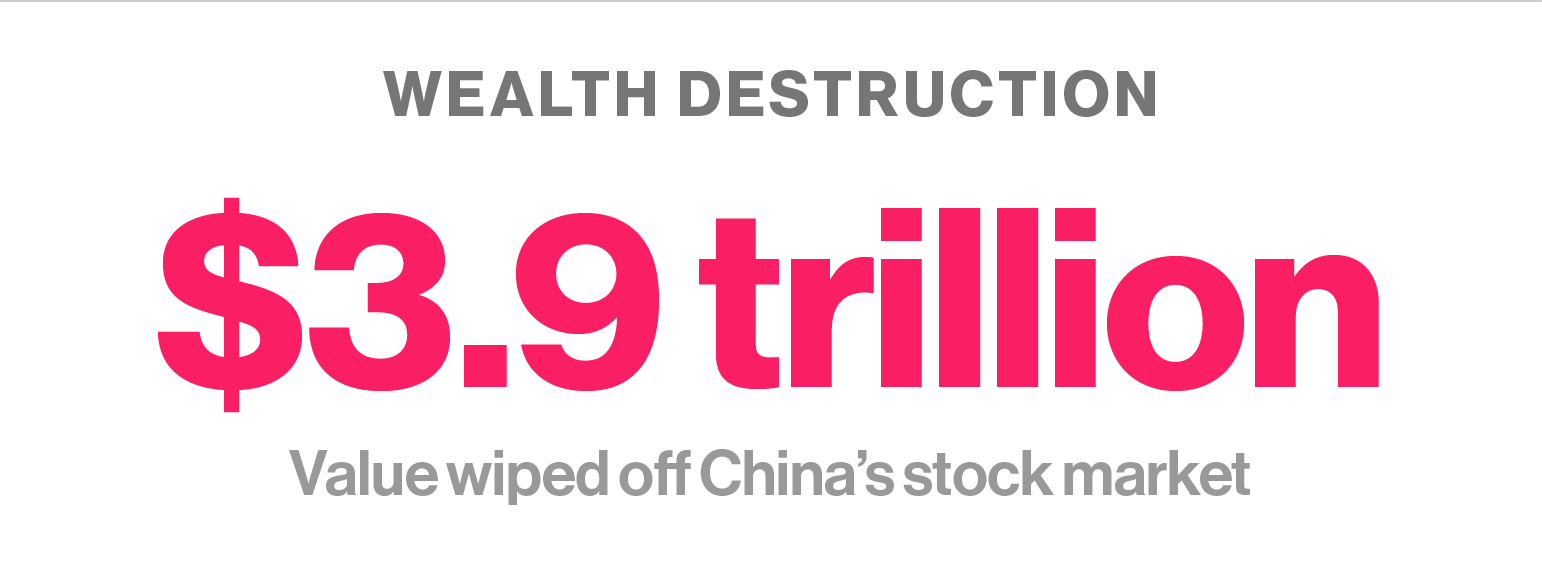
The Shanghai Stock Exchange Composite Index has lost 28 percent since its peak on June 12, the worst selloff in two decades. About $3.9 trillion in market valuation has evaporated, more than the total annual output of Germany—the world’s fourth-largest economy—and 16 times Greece’s gross domestic product. The benchmark is still up 82 percent in the past year, the most among the world’s major markets.

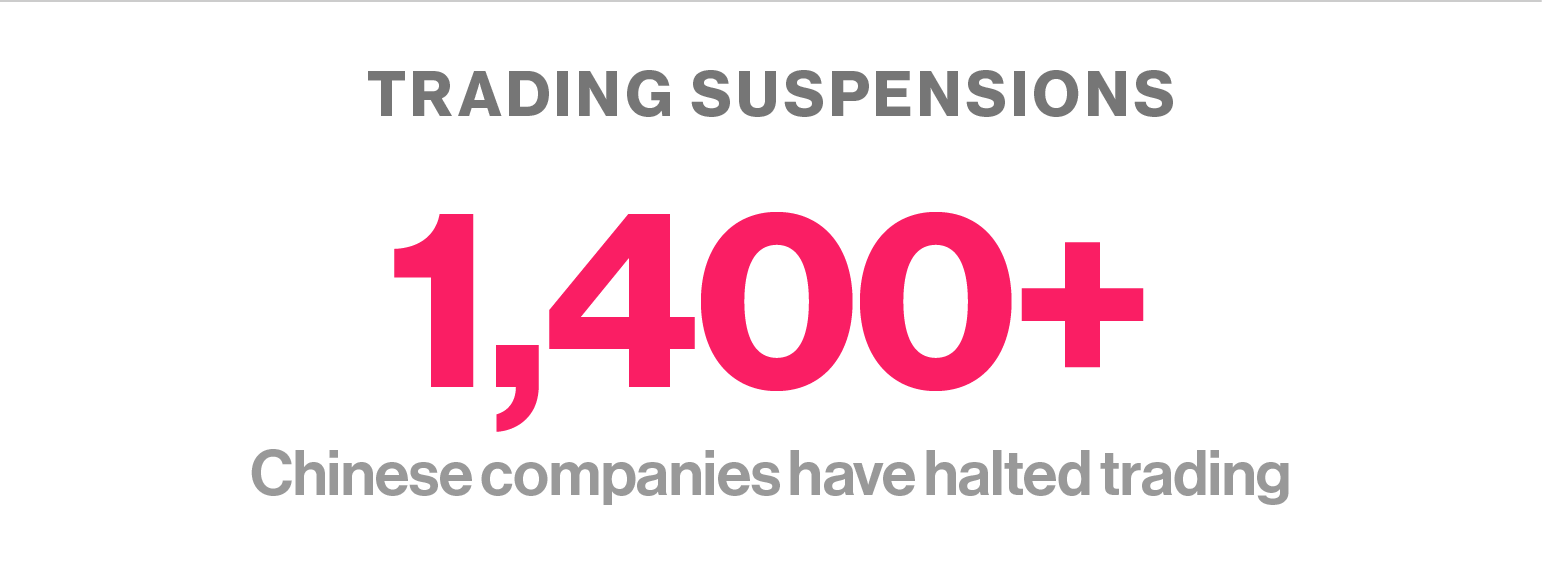
As shares tumbled, companies rushed to apply for trading suspension. More than 1,400 companies stopped trading on mainland exchanges, locking sellers out of 50 percent of the market. The China Securities Regulatory Commission also banned major shareholders, corporate executives, and directors from selling stakes in listed companies for six months.
Chinese stocks have become the most volatile among major markets after Greece. A measure of 30-day price swings on the Shanghai benchmark reached 56, the highest since 2008. The volatility is more than five times that of the Standard & Poor’s 500-stock index.


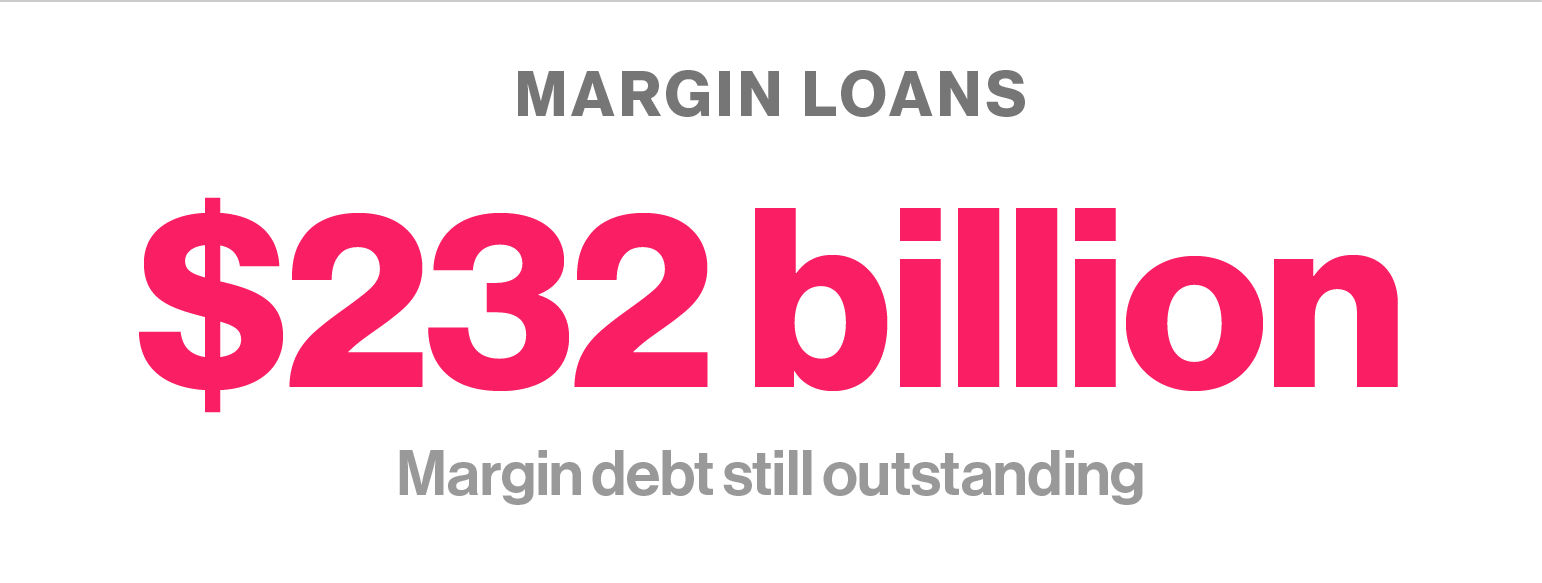
Investors who borrow money from brokerages have amplified the boom-and-bust. A fivefold surge in margin debt had helped propel the Shanghai index up more than 150 percent in the 12 months through June 12. On the way down, leveraged investors unwound their holdings to repay the loans, amplifying the crash. While margin debt on the exchanges has declined by 823 billion yuan ($133 billion) since the mid-June peak, to 1.44 trillion yuan, it’s still more than triple the level from a year earlier.
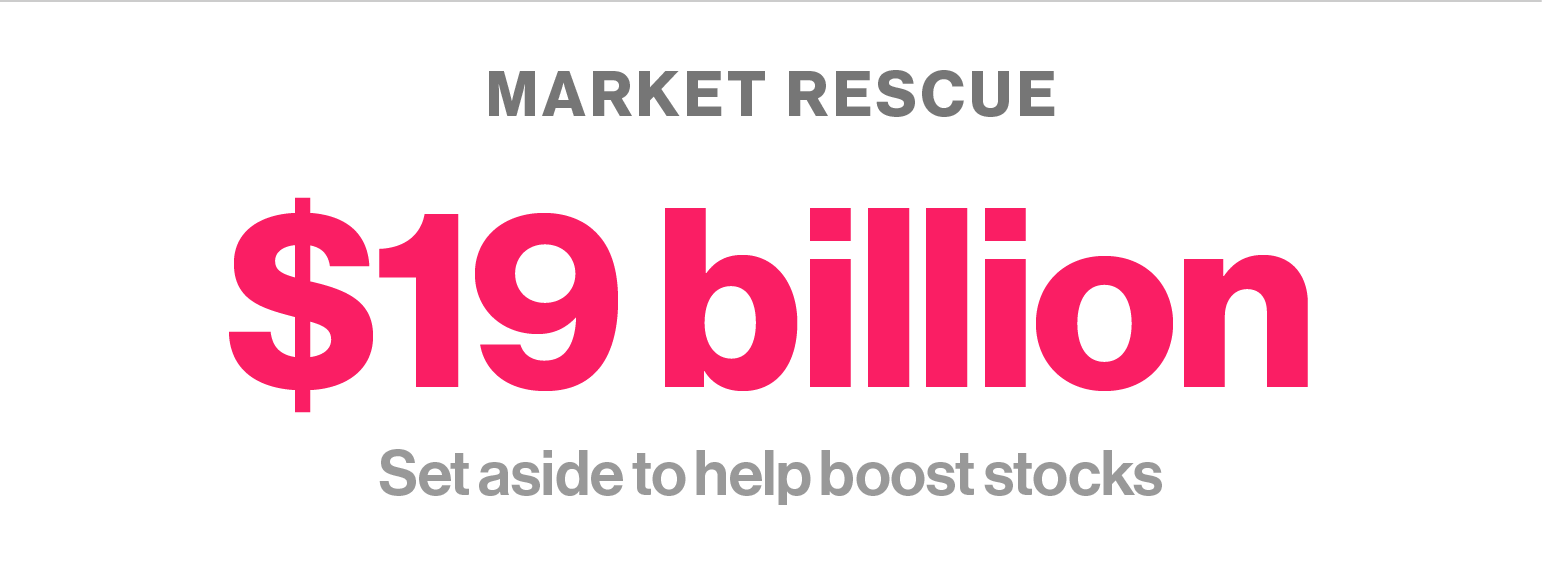
Officials have unveiled market-boosting measures almost every night in the past two weeks. A group of 21 brokerages has pledged to invest at least 120 billion yuan in a stock market fund, taking a page from the playbook used by J.P. Morgan and Guaranty Trust Co. during the 1929 U.S. crash. Regulators have banned major stockholders from selling stakes in listed companies, suspended initial public offerings, and restricted short selling.

While the efforts have helped boost the largest stated-owned companies—oil giant PetroChina has gained 22 percent since June 26—they have so far failed to revive overseas investors’ confidence. Dual-listed Chinese stocks traded 33 percent lower in Hong Kong than on the mainland, the biggest discount since 2009, suggesting investors abroad are more pessimistic than the locals on the valuation of the companies.
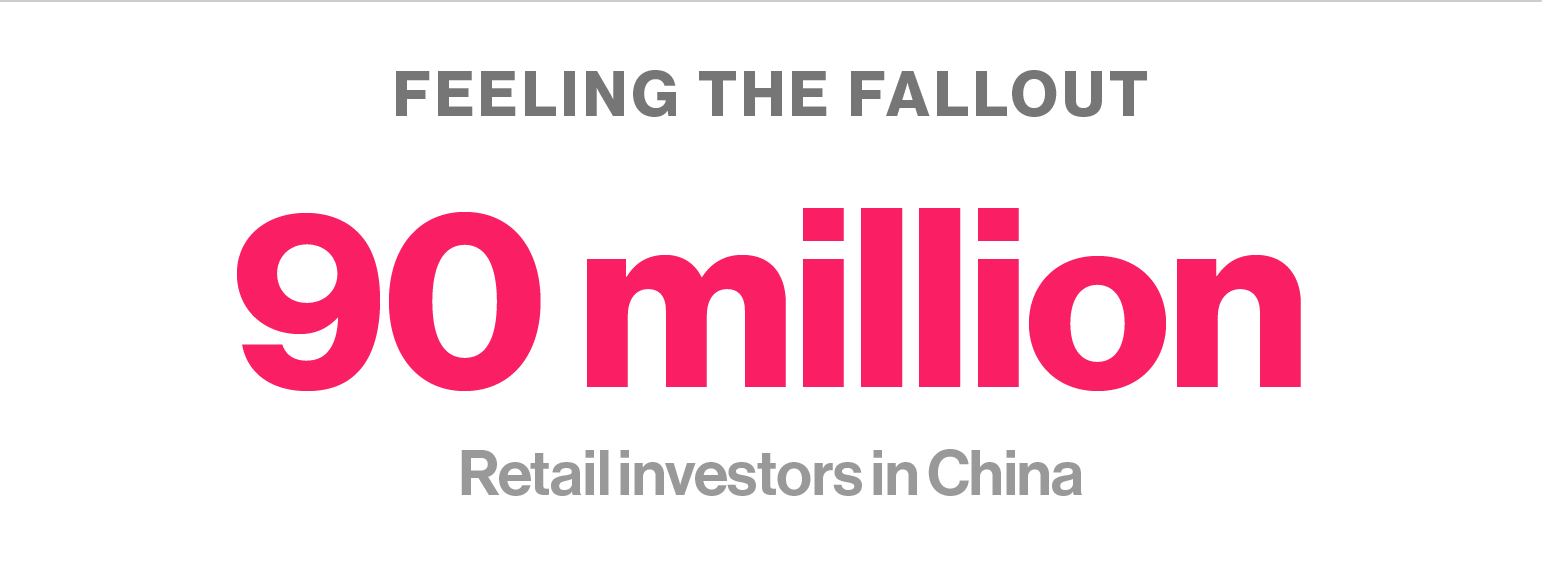
Additional losses threaten to drag down further the slowest economic growth since 1990 and stir social discontent. The world’s second-largest equity market now has more than 90 million individual investors, which is higher than the number of Communist Party members.


Wednesday, July 8, 2015

The Cities That Make Up the Biggest Economy on Earth (BusinessWeek)

"The Asia-Pacific MetroMonitor reaffirms the shift in global economic growth to the East and South"


Asia Pacific cities are driving the global economy.

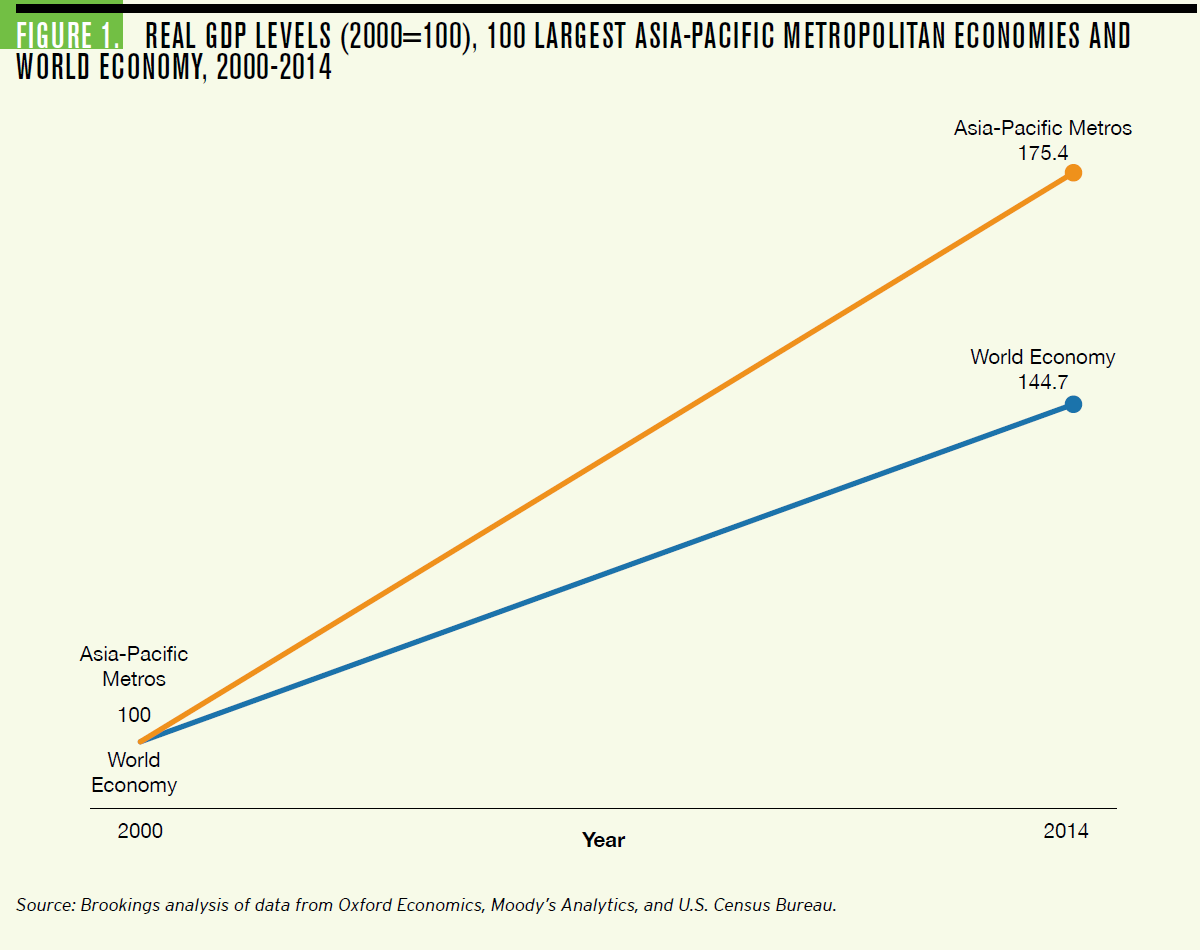
From the West Coast of the Americas spanning cities including Vancouver, San Francisco and Lima to Auckland, Jakarta and the metropolises of Hong Kong, Shanghai and Tokyo, the 100 biggest metropolitan centers across the region make up one fifth of the global economy, or $22 trillion worth in 2014.


Tuesday, July 7, 2015

Visita CAMACOL una Delegación Latinoamericana de Expertos Financieros


Latin American  Business Finance Experts in CAMACOL

Last month a delegation of experts in finance from Argentina, Bolivia, Colombia and Mexico, as well as two journalists in this area visited CAMACOL. This group is visiting the United States at the invitation of the State Department.

The group was interested in  our activities and we informed them about the work of Camacol and its programs, such as the Hemispheric Congress of Latin Chambers of Commerce, the Miami Media Film Market and other embodiments of CAMACOL.

Gladly we attended such prestigious visitors and exchanged ideas and experiences, wishing them every success with their performance in their respective countries and we hope to meet again soon!

The Group exchanged questions and answers with our staff. They were:

From Argentina:
Sr. Matias Carugati, Chief Economist, Management & Fit Consulting
Sr. Esteban Rafele, periodista de finanzas, El Cronista, Buenos Aires.


From Bolivia:
Sr. Andres Marcelo Gutiérrez Villca
Economic Policy Advisor, Central Bank of Bolivia


From Colombia:
Sra. Ana Erika Cuellar Cortés
Rural Development Officer, Colombian Ministry of Agriculture and Rural Development
Srta. Nidia Marcela Granados Galvis
Senior Marketing Analyst, PROEXPORT
Srta. Claudia Milena Porras Lozano
Director, Money Laundering Prevention and Control, Financial Superintendency of Colombia


From Mexico:
Sr. Nicolas Camorlinga Cadena
Compliance Officer and Founder, Exchange House Camorlinga
Sr. Eduardo López Valenzuela
Periodista, El Imparcial Newspaper, Ciudad Obregon, Sonora


Monday, July 6, 2015

Is It Time to Start Shutting Down Law Schools? (BusinessWeek)

No one wants to go to law school, yet new ones keep popping up

A view of the Claire T. Carney Library at the University of Massachusetts Dartmouth campus on April 26, 2013, in Dartmouth, Mass.
 
Photographer: Kayana Szymczak/Getty Images

This month, the American Bar Association provisionally accredited a new law school at Concordia University. More than 200 law schools are accredited in the U.S. An analysis of data from the ABA itself raises the question whether that list should be getting any longer.
 
Law schools exist for a lot of reasons, but a pretty important one is to prepare people to be lawyers. By that standard, a large handful of institutions seem to be failing. Last year, 10 law schools were unable to place more than 30 percent of their graduating class in permanent jobs that required passing the bar, according to ABA data. Those job numbers don't include positions that schools fund for their graduates or people who say they are starting their own practice.

At the University of Massachusetts School of Law, the American school with the worst job outcomes by this measure, just 22 percent of people who graduated in 2014 got those types of law jobs. 

“We are a work in progress, and we need to improve our bar-pass rate and improve our employment, and I am not embarrassed about that,” says Mary Lu Bilek, the dean of U-Mass Law. Forty-two of the 60 U-Mass Law students who took the bar in February or July 2013 passed the test. The school counted 81 graduates in 2014. Bilek notes that the school's employment numbers have improved in recent years and says she doesn’t think it’s fair to discount people who have opted to do things with their J.D. besides become lawyers.

“The traditional elite jobs aren’t the jobs that our students generally want,” she says. “There’s not room for another law school that wants to have students who want to do that, because there aren’t enough jobs for that.”
Years of a disappointing job market for lawyers have dramatically reduced the number of people interested in getting a law degree. According to the Law School Admission Council, just under 53,000 people are expected to apply to law schools by the beginning of the 2015 academic year, down from more than 100,000 in 2004.

Instead of making more things that fewer and fewer people want to pay for, one thought would be to eliminate some of those things. Are there law schools that should disappear? “Maybe. But how is that going to happen?" asks Al Brophy, a law professor at UNC. "Will it happen because places say voluntarily, ‘hey, we aren’t making money, so we should shut down?’” 

Schools will not volunteer for their own demise, Brophy says, partly because so many people—alumni, faculty, staff—have a strong interest in keeping the end at bay. “It is going to take a lot to have schools shut down. What I think we are going to find is that they are going to be able to operate on shoestring budgets.”

Bilek, the U-Mass law dean, says she will continue to focus on preparing students for the careers they want, even if they stray outside the standard path for lawyers. 

“I don’t want law schools to get away with pretending students can get jobs that they can’t get,” she says. She also doesn’t want the only measure of a school’s success to be the number of people it places in traditional law firms.


Wednesday, July 1, 2015

ISPs do throttle traffic -- and the FCC can't stop it (InfoWorld)

throttle
Fast lanes exist, neutrality doesn't, and this is all perfectly legal under the FCC's new rules
Lots of attention was paid this week to a study showing that major ISPs are throttling traffic. At first glance, it seems a clear test case for the FCC's Net neutrality rules, which prohibit blocking, throttling, or creating special "fast lanes" for content. The problem is, this is not the throttling you're looking for, Obi-Wan.
The new rules went into effect a fortnight ago, and aside from scattered accounts of consumers who wrangled price breaks from their cable companies after filing complaints with the FCC about unfair billing practices, and news that Sprint stopped slowing traffic for customers who use a lot of data, very little has changed for Internet users -- or is likely to anytime soon.
Perhaps that frustration explains The Guardian's eagerness to jump on a story, rehashed by others, about a "new" study from Battle for the Net purporting to expose ISPs in the act of deliberately throttling Internet traffic. Except the data isn't new; it was first released by M-Labs in October 2014 and updated in April.
And the "throttling" described is not banned by FCC rules. What M-Labs' measurements demonstrate is the difference in interconnection performance between IP networks and CDNs (Content Delivery Networks) and ISPs in various U.S. cities. For example, in Atlanta, Comcast had median download speeds from GTT of 21.4Mbps during peak hours, while AT&T provided median download speeds of only 0.2Mbps.
Caught in a nefarious act, you might say? Far from it. AT&T makes no bones about it: When a network sends more than twice the traffic it receives, it is required to pay AT&T an interconnection fee, and the company won't upgrade capacity to a CDN with heavy traffic until it is paid. After all, the FCC doesn't require ISPs to upgrade their infrastructures to handle larger volumes of traffic (even though AT&T customers might believe that their hefty monthly tithes entitle them to a network capable of handling the traffic they request).
Apparently GTT's check is lost in the mail, hence the dismal connection to AT&T's network.
Today it's estimated that half of all Internet traffic comes from just 30 providers, including Google, Facebook, and Netflix. And more and more of these large content providers have set up their own CDNs, rather than use a company like Akamai, and signed agreements with multiple ISPs for their CDN connections. Companies like Google, Facebook, and Netflix -- and consumers -- have benefited from these kinds of Internet fast lanes for years.
Of course, as TechDirt says, "When Google and Netflix improve their networks, the benefit goes to everyone. When Comcast sets up tollbooths, the only thing that goes to everyone is increased costs.... Every Internet site has to pay once for bandwidth and then a second time to ‘get access' to end users."
Net neutrality advocates argue that ISPs are holding traffic for ransom, but unfortunately, ISPs are seemingly within their rights to do so when it involves a CDN or peering arrangement. Fast lanes into ISP networks are a fact of life; it's fast lanes within the "last-mile" Internet connecting ISPs and their customers that are now illegal.
The FCC chose to focus on the last-mile Internet, leaving interconnection agreements with ISPs mostly untouched -- although the rules do, for the first time, give the FCC the authority to police disputes about congestion and examine complaints about unfair interconnection pricing on a case-by-case basis.
Consumers, of course, are caught in the middle when interconnection disputes arise -- as they did last year with Netflix. ISPs claim (bandwidth) poverty and argue that large content providers should pay up to add additional network resources. CDNs counter that they already paying for Internet access and for the servers and infrastructure needed to facilitate delivery of their content -- content that users want so much they are willing to pay cable companies through the nose to gain access to it -- so ISPs should be footing the bill for upgrading their own networks.
Frustrating for Internet users? Certainly. But while many agree that ISPs are too big, too powerful, and abuse their monopoly by "throttling" interconnections from CDNs that refuse to pay up, the situation is not likely to change any time soon.
This may sound like Internet traffic being held for ransom, but it's all perfectly legal and has been standard operating procedure for 20 years. CDNs and peering connections came about as a means to deliver content faster and more efficiently to Internet users. By making arrangements to put servers inside an ISP network and set up direct connections to ISPs, large content providers were able to facilitate the delivery of their traffic to users.
As streaming media expert Dan Rayburn commented on his blog,  As consumers, we pay ISPs to get a certain level of connection to the Internet, via the last mile the ISPs operate. We do not pay for any kind of "guarantee" to be able to reach a certain website or video service, with a certain level of quality. I get that many consumers think that is what they are paying for, but it isn't.
Suck on them apples.
Still, there is a glimmer of hope that with FCC oversight, ISPs will be more reasonable. Cogent and Level 3, which have long railed against telecoms' shakedowns, threatened to file complaints with the FCC, alleging that ISPs' demands for payments to upgrade interconnection points far exceeded reasonable costs and demonstrated an abuse of market power. Both recently signed new interconnection deals with AT&T, Comcast, and Verizon.
The real problem remains: Consumers have little choice in Internet providers. "In a more competitive market, I suspect the consumer experience would count much more to a provider than the proportionately tiny amount of investment required to manage Internet traffic. When providers shift their priorities towards customers, these kinds of disputes will become extremely rare," commented Stop the Cap! 
Meanwhile, in a world where local ISP monopolies may legally opt to "throttle" interconnections, Simon & Garfunkel's advice to "slow down, you're movin' too fast" leaves few Internet users feelin' groovy.